
Ragù is one of Italy’s culinary treasures. Outside of Italy the term “Bolognese” or even the oddly spelled “Bolognaise” has become a synonym for any Italian meat sauce. This cannot be further from reality. Every region, every home has is own recipe which is taken seriously and often passed through generations.
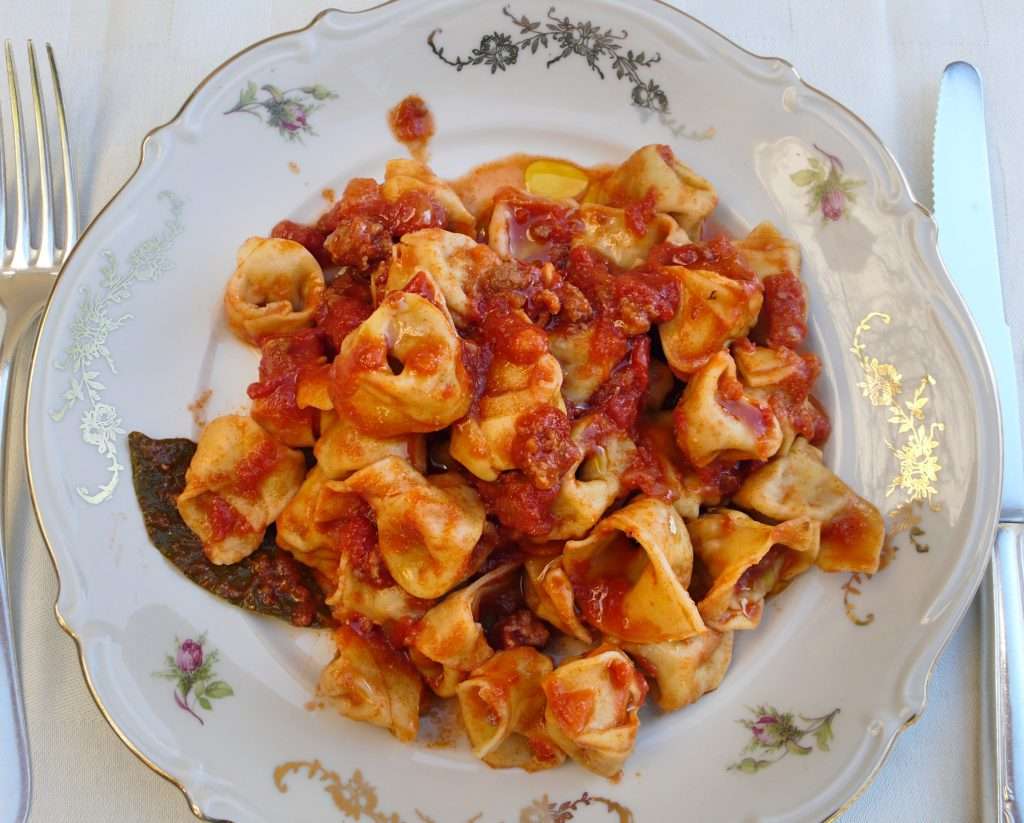
Ragù might be made with different cuts and types of meat which might be minced or cut into whole pieces. In addition, ragù might be made with fish and include various proportions of tomatoes or not at all. A ragù without tomato is called ragù in bianco (white).
 My own pork and beef creamy white ragù made with soffritto, wine and slowly simmered with a reduction of chicken broth. No cream!
Throughout my childhood, my mother made a huge pot of ragù every week which we would eat for our late lunch when we returned home after school and work. Even the dog and the cat often ate pasta with ragù and a sprinkle of Parmigiano for lunch.
For my mother we all were family and deserved the same meal. If you were wondering if that was good for the pets, consider that the dog lived until she was 22 years old and the cat also became very old. So, may be, my mum was right.

To make the sauce, she cooked chunks of several types of prime quality meat – beef, pork and occasionally pigeon – with lots of olive oil and plenty of homemade tomato passata. It was divine but by the time my brother and I were teenagers we had become bored with that sauce. We wanted tortellini with cream, pesto, risotto, all those exotic dishes that appeared from other regions and became all the rage in the 1970s and 1980s.
I remember my first taste of a ragù bianco in a trattoria near Florence. My parents would drive us two hours in their little fiat 500 to eat pappardelle (wide fettuccini) served with a wild hare ragù. As you probably know, game has always been a delicacy in Italy. Even then the fame of a special dish would travel far and wide.
I must have been 11 or 12 years old, not especially adventurous with food, but I can still picture the delicate strands of homemade pasta doused with that velvety sauce. The ragù was intense and delicate at the same time, with hints of wine and herbs from the woodlands, and curls of cheese – may be a Pecorino – to balance the sweetness of the meat.
For years, I had more or less forgotten about that experience, may be because I have been so focussed on cooking and eating vegetables. Last spring however, my friends Tracy and Matt asked me to include a ragù bianco in their cooking class. I thus embarked in a culinary research spree. Eventually, I came up with this recipe which, although not made with game, still has that delicate and complex flavor from my childhood. I hope you enjoy it too, it’s a real treat which – provided that you have access to good quality meat – will make any meal truly special.
Recipe
Ingredients
For the ragù:
- 200 g (7 oz) beef chuck (in Italy: fracosta or reale), minced
- 150 g ( 5 oz) pork sausage, not spicy, casing removed
- 1 tablespoon butter
- 1 tablespoon extra virgin olive oil
- 1/2 onion (about 50 g / 1 and 1/2 oz)
- 1 stick celery
- 1 carrot (about 15 cm long / 6 inches)
- 1 bay leaf
- 1/2 teaspoon peppercorns
- zest of 1/4 lemon
- 1 teaspoon cornstarch
- 1/4 cup white wine
- 1/2 l (2 cups) homemade chicken broth, low or no-salt
To finish:
- 200 g fresh pappardelle
- 2-3 tablespoon grated Parmigiano cheese
Directions
Prepare chicken broth as explained here.
Finely dice carrot, onion and celery. In a large shallow pan or skillet, combine olive oil, butter and vegetables and cook, over low heat, stirring occasionally, until they are softened and just translucent. Add the bay leaf, lemon zest, peppercorns and cook, stirring frequently, until fragrant, about 30 seconds.
Add the meat, increase the heat to medium-high, and cook until starting to brown. Sprinkle the corn starch over the meat, then deglaze with wine, scraping the brown bits from the pan. As soon as the alcohol is evaporated add 1/4 of the broth.
Partially cover the pan using a wooden spatula across one side of the pan to let the wine evaporate slowly. Keep reducing the broth and adding more, about 1/4 cup every about 15 minutes, until the meat is completely tender and coated by a glossy, amber sauce. Only at this point adjust salt and if needed, add additional, freshly ground black pepper.
When the sauce is almost ready, bring to the boil a pan of well salted water, cook the pappardelle al dente (about 1 minute). Pick them from the water with a spider skimmer or tongs and toss them rapidly in the sauce, adding a few tablespoon of pasta water to bind the pasta to the sauce. If the sauce is too liquid, increase the heat to absorb the extra moisture and serve, sprinkled with Parmigiano and a drizzle of your best extra virgin olive oil.
Serves 2


